Most supply chain strategies focus heavily on getting products to the customer. However, managing the flow of products back up the supply chain—known as Reverse Logistics—is equally critical to operational profitability in 2026.
The Complexity of the Returns Process
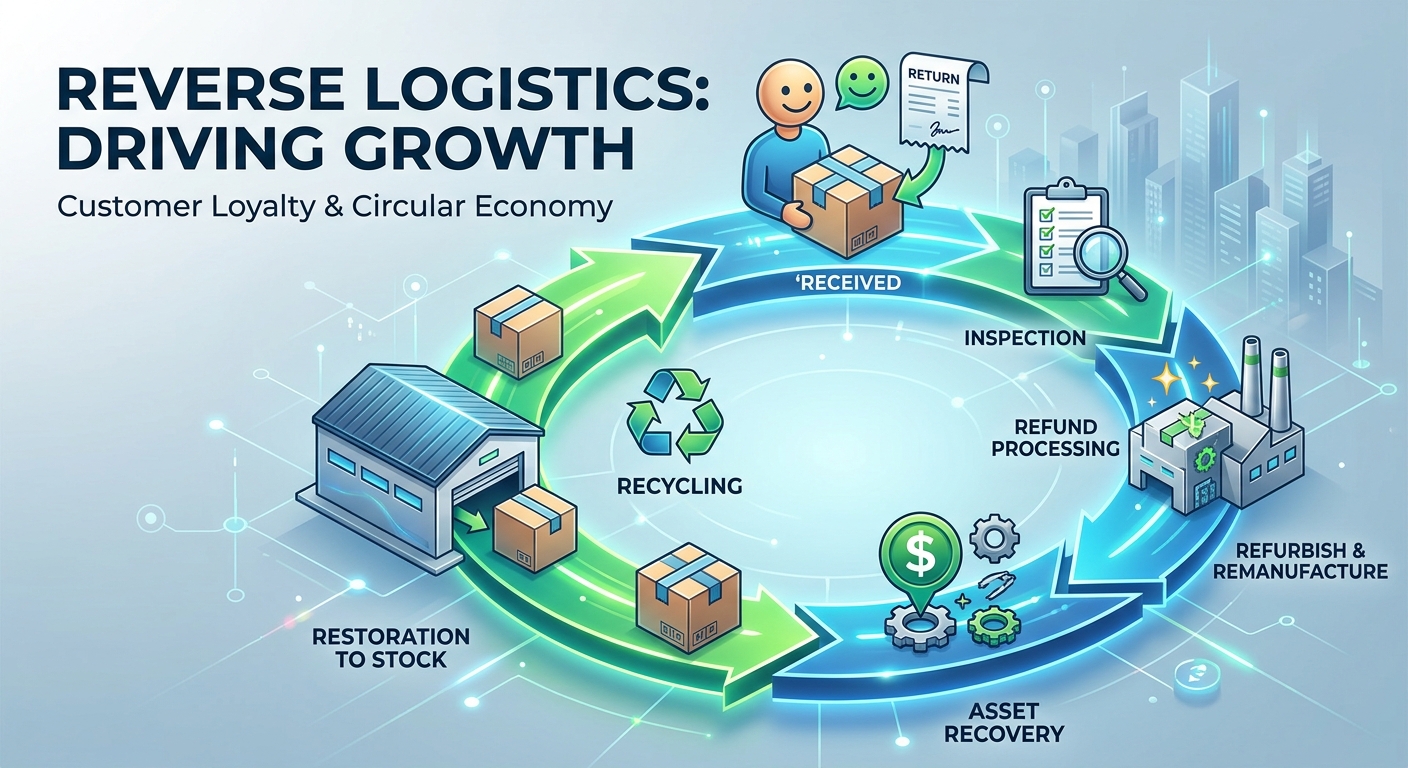
With online return rates routinely hovering between 15% and 30%, businesses need a systematic approach to handle reverse freight. An effective reverse logistics program encompasses:
- Inspection and Triage: Rapidly assessing returned items to determine if they can be restocked, refurbished, or recycled.
- Asset Recovery: Extracting value from defective goods by salvaging usable parts before disposal.
- Circular Economy Integration: Designing return loops that prioritize recycling and waste reduction to meet modern sustainability goals.
Turning a Cost Center into a Competitive Advantage
A poorly managed returns process ties up capital in dead inventory and ruins the customer experience. By utilizing a 3PL equipped with dedicated reverse logistics capabilities, businesses can accelerate refund processing, return viable products to active inventory faster, and significantly reduce operational waste.